Can't Find What You're Looking For? Try Searching!

Sunday, September 8, 2013

Eels!!!!


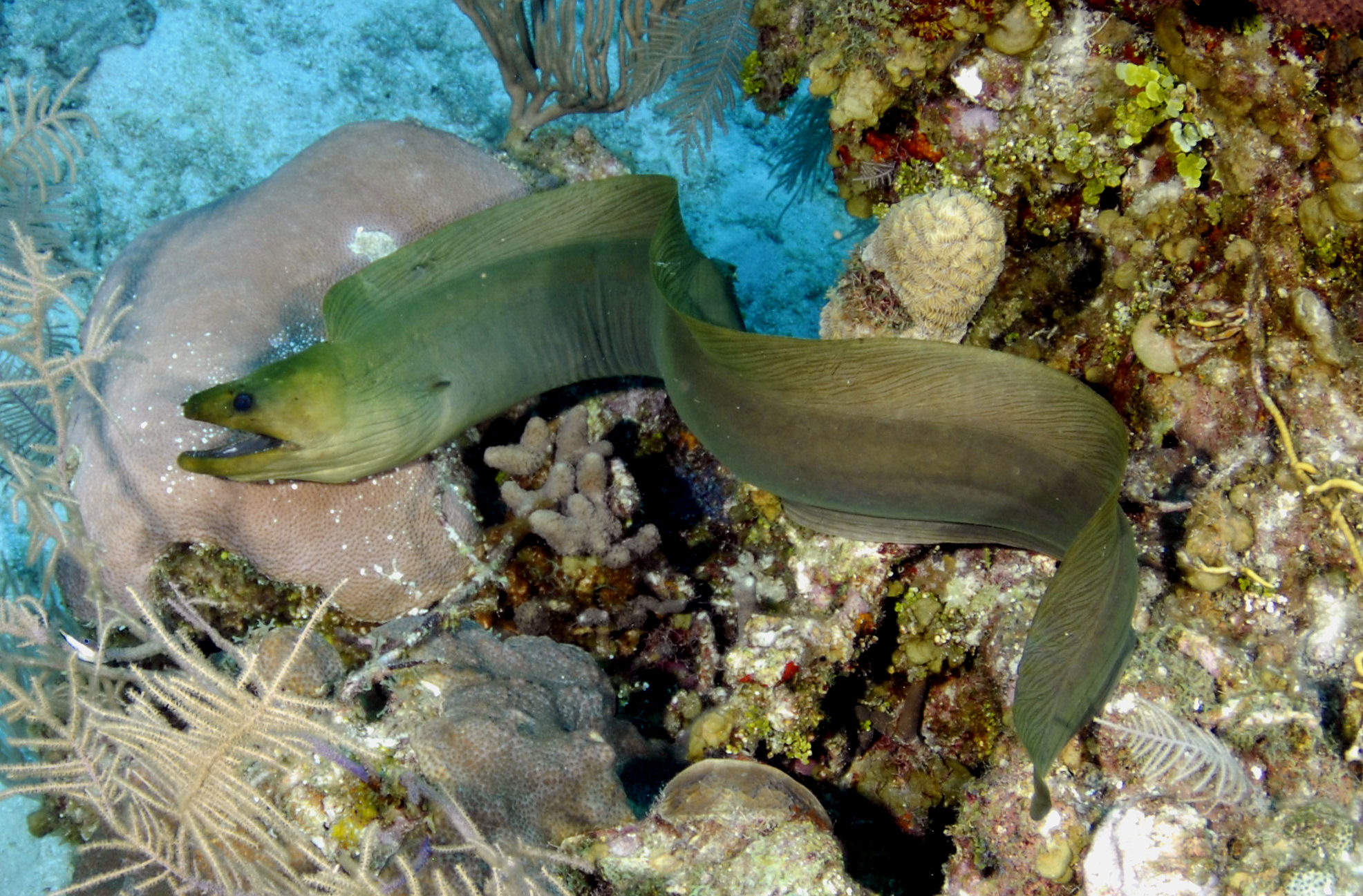
What is this snake flattened by a steamroller? It's an eel! Eels are very odd and mysterious organisms, and little is known about them. However, we must race to save the eels before overfishing devastates the population. 


Most eels live in the shallow waters of the ocean and burrow into sand, mud, or amongst rocks. A majority of eel species are nocturnal, and thus are rarely seen. Sometimes they are seen living together in holes, or "eel pits". Some species of eels also live in deeper water on the continental shelves and over the slopes deep as 4,000 m (13,000 ft).They begin life as flat and transparent larvae, or glass eels. Glass eels drift in the surface waters of the sea, feeding on marine snow, small particles that float in the water.  Maturing eels travel upstream and are forced to climb up obstructions, such as weirs, dams, and natural waterfalls. Eels are also caught and raised for food, especially in Japan and China. Once, the eel population declined dramatically due to overfishing, and it became illegal to catch eels without a license. Still, though, they are raised for food. Luckily, now, the eel population is making a comeback.

This is a glass eel. They are totally transparent, and only a few centimeters in length. 

When you think of eels, probably you think of electric eels. Their shocking ability comes from two organs in their body:  the Hunter's organ, and the Sach's organ. These organs make up four-fifths of its body, and are what give the electric eel the ability to generate two types of electric organ discharges: low voltage and high voltage. These organs are made of electrocytes, lined up so a current of ions can flow through them and stacked so each one adds to a potential difference. When the eel locates its prey, the brain sends a signal through the nervous system to the electrocytes. This opens the ion channels, allowing sodium to flow through. By causing a sudden difference in electric potential, it generates an electric current in a manner similar to a battery. The Sach's organ is used mainly in electrolocation, while the Hunter's organ produces the current to shock prey.
Electric Eel
You can help protect eels by simply not eating it. At some sushi restaurants, they sell eel sushi or eel sauce. Before you order an eccentric sort of sushi, ask if it involves eel. 

Monday, September 2, 2013

Invasive Species

    
This looks like your average toad, right? Wrong! This is a cane toad, a species of toad that is taking over Australia as you read this!


Cane toads were originally imported from South America to eat the sugar cane beetles that were devouring the farmer’s crops. However, they ate more than sugar cane beetles. Cane toads had no natural predators, and a great abundance of natural food. This is a bad mix for the lives of the native organisms. To make matters worse, cane toads are highly toxic, and whatever organism eats it will die. They ooze white poison from a gland on the side of their body. You can research whether or not your country has cane toads, and if they are a problem in your country, do not touch any brown amphibian you see(unless it’s a salamander)!
 These white gobs are the killer poison.


Here is a case of invasive species you may be more familiar with, especially if you live in the southern United States. The case of the invasive brown stinkbug! Probably every stinkbug you see is brown. When you see a green stinkbug, you may find it unusual. Once, the brown stinkbug was an unusual sight. What happened? When these new brown stinkbugs were introduced, they had less natural predators, and were better equipped for competition than the green ones. Therefore, the brown ones took over. You can help monitor this by participating in SciStarter project Brown Marmorated Stinkbug Project(http://www.scistarter.com/project/663-Brown%20marmorated%20stink%20bug%20locations?tab=project)


Here is another unusual case of invasive species:  The invasive lionfish!


This is quite an extravagant display! These fancy fins are actually poison spears! Lionfish live in shallow waters and eat small fish and mollusks. These fish have a large appetite, and if their population unnaturally explodes, it can result in disaster. Now, lionfish are eating their way through the Atlantic ---- at a faster speed than sharks can eat them! The trouble all started when only six lionfish were released from an aquarium. This shows how only a few non-native species can cause disaster in a new environment. What can you do? Don’t release any pet that you want to get rid of or  give the pet an opportunity to escape(unless it is an outdoor cat or dog!).  Advertise the pet on a local bulletin board, or in your neighborhood. You can even say on the flyer not to release in the wild!

Sunday, September 1, 2013

Ways to Help Snails


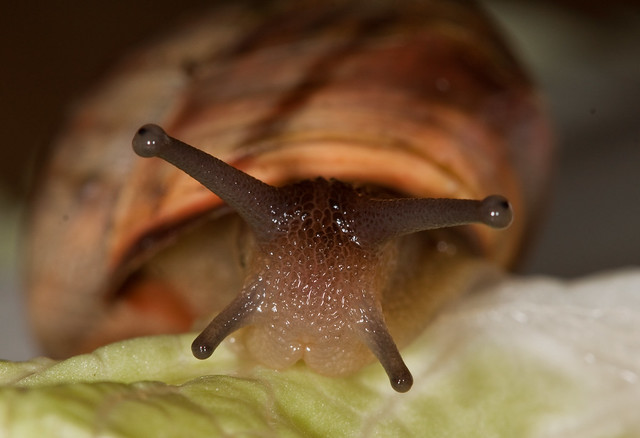
You've seen this before! It's a snail! Here is how to help these one-of-a-kind mollusks.

Watch your step! Whenever you walk down your driveway or to your front door, look at your feet! If it is after a storm, it is guaranteed you will come across one. Do not step on it! 

Snails and slugs are considered garden pests, but do not kill them! Before you kill an insect(or mollusk, in this case), always think about what the alternative could be. Here all you have to do is make a snail habitat in a fairly large fishtank. First, out in a thin layer of soil. Next, put in some rocks(both large and small). Then, add in some grass and moss. After that, you can prop some sticks up on the walls of the tank. Now you are ready to stock it with food! You can put in juicy leaves, but from my experience,snails prefer mushrooms! 
You can make your backyard snail-friendly, too. Whenever a log falls, instead of putting it in the trash, shove it in a shady spot of your yard. Scatter the ground with bits of dead leaves and rocks, and wait for the snails. 

Both snails and slugs are members of the family molluska, and in the class gastropoda. Gastropod means stomach foot, but snails actually do not move by means of stomach. Their stomachs and other organs are located in the shell. Snails and slugs have very odd eyes, them being suspended on tentacles. However, these long eyes are useful for probing in the leaf litter while seeing what you are doing. They can also act as feelers to sense what is in front of them. If there is danger, the snail will draw into its shell. If you have touched a snail, this was probably its response. 
Sometimes you may have seen trails of shiny slime. This comes from snails! This substance is mucus produced by the snail's 'foot'. This is usually used for crawling on. The mucus of a gastropod serves the function of a glue, allowing land snails to crawl up vertical surfaces without falling off. The slime trail that a land snail leaves behind is often visible as a silvery track on surfaces such as stone or concrete.
However, snails do not live only on land. They can live in water, too! When living in water, snails tend to appear much more colorful, but other than that, they look exactly like land snails. These water snails are only found in shallow water, and are especially abundant in coral reefs. Unlike land snails, sea snails can be poisonous to the touch(except for those in pet stores). They are also carnivorous. Some species will even eat other species of snail! Sea snails have the same internal structure and produce mucus.

Tuesday, August 27, 2013

Fish--- At the Bottom of the Ocean!!


When you think of fish, you probably think of brightly striped fish in the coral reefs, or even what you eat. Certainly you don't picture this:
Here is another picture of a deep-sea monster:
Yes, it exists and it is not computer-edited. The angler fish, along with the fangtooth, live close to the very bottom of the ocean, in the particular region called the Twilight Zone. Here it is completely dark and inhospitable. You are probably wondering, how  do these organisms find food? They use bioluminescence--- the way of making light that glows in the dark! An angler fish uses the pole sticking out of its head as a lure. It will flash bioluminescent light. Since other, prey organisms think of a light as possible food, and will be attracted to it. As you can see from the menacing set of teeth, the organism wil be in for a nasty surprise. How do organisms mate in the dark? That's not really known. Perhaps it's just luck! Here are some eccentric-looking organisms from the very bottom of the ocean:
As you can see, this organism, known as a copipod produces bioluminescence. Copipods are much smaller in actual size, and eat the few particles of plankton that drift down from higher waters. This plankton falls down, creating an effect that looks like snow, hence the name marine snow. Here is something that preys on copipods:
This is indeed alive! It is hard to believe(when I first saw it I thought it was from a science fiction movie!). This odd organism is called gigantocypris, and preys on copipods. Therefore, it is approximately the same size(the size of a pea). Gigantocypris seeks out the bioluminescent flashes of copipods. Then, it must rely on mainly luck, and a tiny bit of its senses. However, it can be fooled. Just look at this:
This shrimp has been frightened by something, and is squirting bioluminescent glue to keep it away! This tactic is similar to that of the octopus's ink. 

This is a comb jellyfish, and another glue-producing organism. When threatened, it will shoot out a sticky net of glue. Here in the picture, the comb jelly is just going about its business without being eaten---so far. 
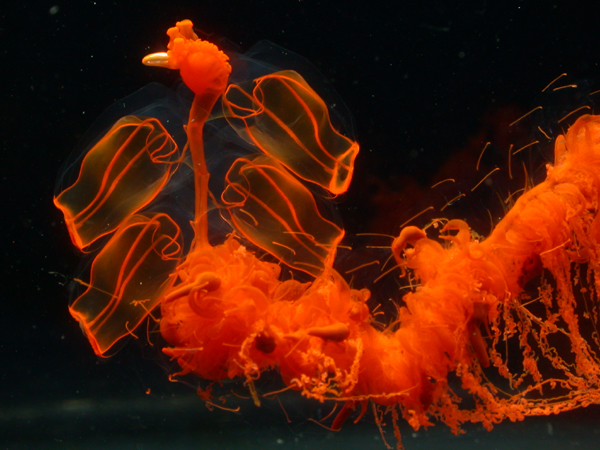
This is actual size! What is this beautiful scarf? It is a siphonophore! All these fancy bulbs and billows are filtering machines that filter out prey. After prey is trapped, it is zapped with poisons from the siphonophore's  stinging cells. All it has to do is sit and wait! For additional help in catching prey, red light is invisible to the eyes of almost all deep sea life forms. Therefore, no one would even know it is there, so how can it be avoided? 
This peculiar organism is known as phronima, a type of amphipod. Some species of it live in the bodies of jellyfish it paralyzed itself. Phronima is a fierce predator, and will take whatever crosses its path.
Half of this eel's head is its mouth! This gulper eel can tackle something twice its size with such a huge mouthful. What you saw in the picture is way less than even half of the eel's body. It has a long tail that can extend to a few meters long! You can't afford to be picky of you live in the deep sea! 
Does this remind you of an octopus 'dressed up' as an elephant for Halloween? This dumbo octopus has been only recently discovered, and those flaps may or may not be ears. 
This is a firefly squid. 

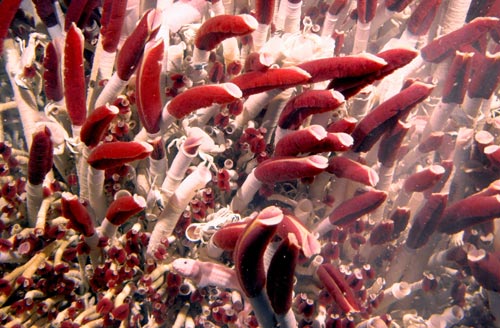
These are tube worms--- found only at the very bottom of the ocean! 
This is a type of sea urchin that dwells at the very bottom of the ocean! 
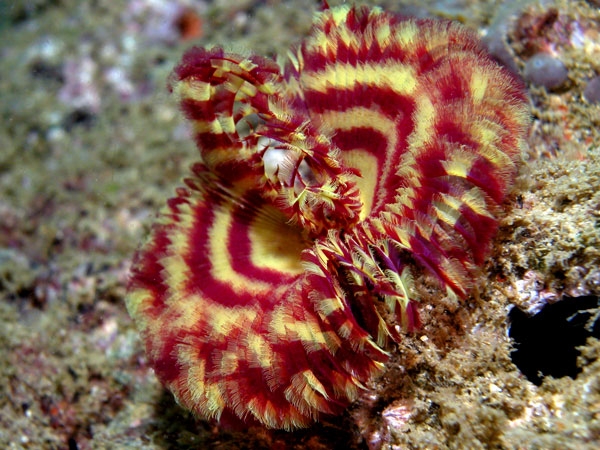
Polychaete Worm
Another Polychaete Worm
This hatchetfish has quite a dazzling display to stun predators that try to catch it! It will flash these silver scales. However, what if it is attacked from the bottom? There is a defense for that, too! Hatchetfish possess photophores, color changing cells that detect the very faint beans of sunlight that pierce the Twilight Zone. This helps them camouflage with the exact color of the water. 

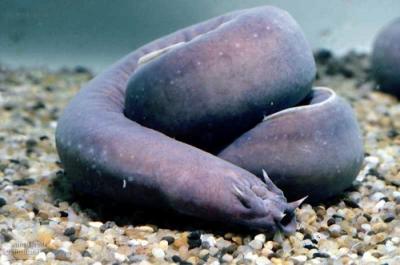
Hagfish
This snake-like fish lives at the very bottom of the  ocean, and feeds on whatever dead meat floats to the floor. 
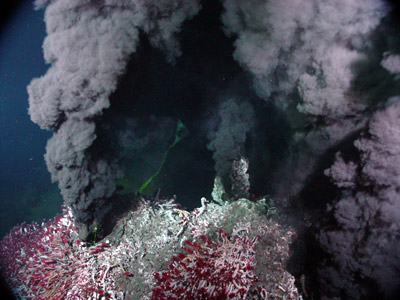
Underwater Storms
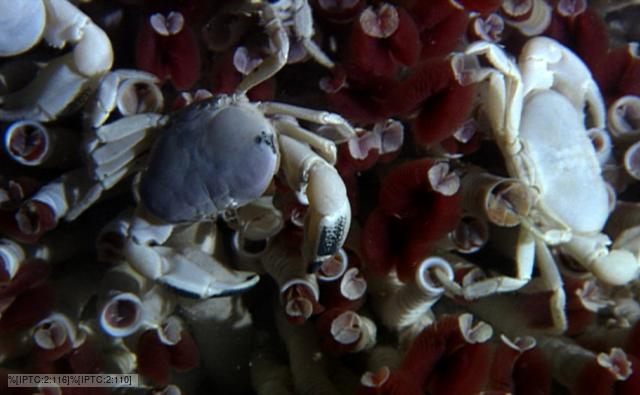
These hydrothermal vents, or black smokers, spew out boiling liquid carbon dioxide. It's that hot! However, some organisms still live here, even with no oxygen! Anaerobic bacteria dwell here, along with tube worms and some very tolerant species of crab(shown below)
Vent Crabs


Ways to Help Worms

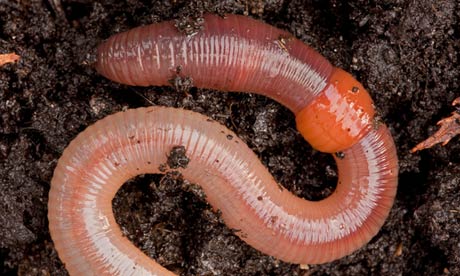
Have you ever dug a garden? If so, you may have come across worms. They do look ugly, but they contribute major help in the health of your plants. Here is how to help them in return:

Participate in SciStarter project Great Lakes Worm Watch(http://www.scistarter.com/project/333-Great%20Lakes%20Worm%20Watch). Another thing you can do is make a little 'worm refuge'. Turn over and dig up some soil only a few inches deep. Scatter some leaves on it, and it is ready for the worms! Whenever you see a worm out on your driveway, or stuck in the sun, help relocate it to a shady, grassy area. Also, when you water your plants, wet the soil around it, too. The worms will be thankful! 
How exactly do worms help your garden? They dig tunnels through the soil, aerating it in the process. That's not all they do. Worms eat leaves, and they excrete the excess in the form of droppings--- in the soil! These droppings are rich in nutriment and act as fertilizer for plants.  Fun Fact  about earthworms: If a predator bites of part of a worm's body, it can grow it back! 
Normally worms grow to be at most a few inches long. However, some are giants. One rare type has been known to reach 6 feet long! These species spend a few months or more in cocoons, growing to their full size. Then, they burrow underground and spend the rest of their lives there. Sometimes, if you are in the right place at the right time, you may hear gurgling sounds made by the worms in their tunnels. However, these worms live exclusively in certain places. 

Monday, August 26, 2013

Ways to Help Praying Mantises


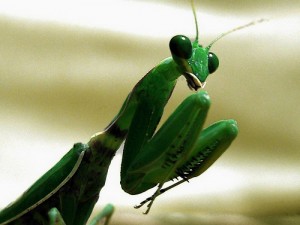
What is this crazy-looking insect? It's a praying mantis! You may have never seen one in your life! Why? It's not that it's rare, it's simply a trick of good camouflage! It is likely that there is one sitting on your lawn or in your garden right now! That is, if you don't use pesticides. Pesticides exterminate the bad insects, such as aphids and caterpillars, but they also kill the helpful ones. Praying mantises are helpful, and will eat any insect that crosses its path. From the picture, you probably noticed those menacing-looking claws with slicing spears. A praying mantis will strike its prey at lightning-speed with these and eat its meal off the spikes that skewer the prey. 
Here are some ways to help praying mantises:
You probably guessed that you shouldn't use pesticides. Just leave the job to the praying mantises! The patch of grass you are using for grasshoppers can be used for praying mantises. 
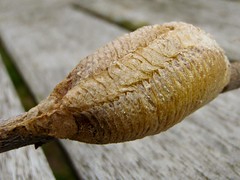
What if a predator does see a praying mantis through its camouflage? The praying mantis still has a defense. It will spread its wings, bear its claws, and make a hissing noise, similar to that of a cat! Of course, it could also flee. However, such camouflage could also have drawbacks. How do male and female praying mantises find each other? They can use pheremones, or simply rely on bumping into each other! Once they mate, the female will eat the male and lay eggs. Eggs are typically deposited in a frothy mass that is produced by glands in the abdomen. This froth then hardens, creating a protective capsule. The protective capsule and the egg mass is called an ootheca. Depending on the species, the ootheca can be attached to a flat surface, wrapped around a plant or even deposited in the ground!
An ootheca
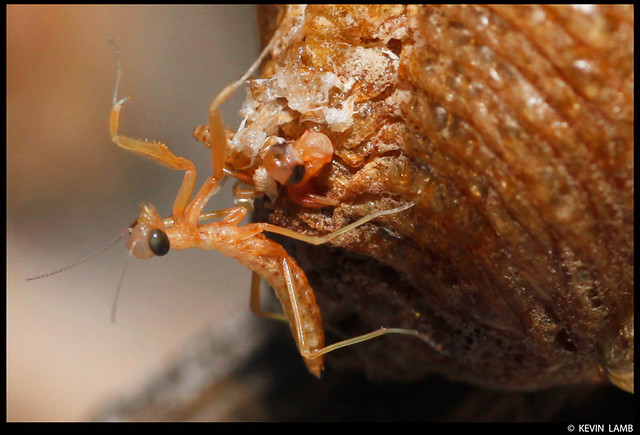
The first moments out of the ootheca

Sunday, August 18, 2013

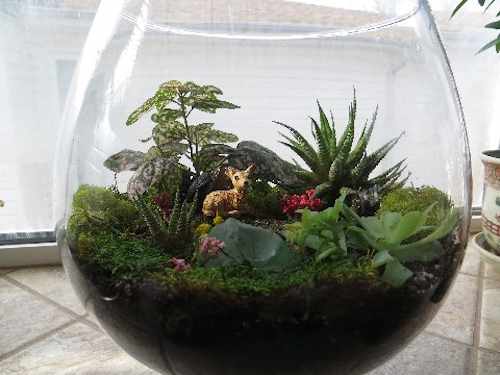
Make a Miniature World ----- With Terrariums!!


 Do you want to grow plants in your own home? It's easy, if you make a terrarium. Here's how:
1. Find a suitable-shaped glass container that plants can fit through. You can easily get one at your local craft store. 
2. Pour in an inch-thick layer of pebbles or rocks to create a false drainage system for the plant roots.
3. Add a thin layer of activated charcoal. This keeps the water fresh, and prevents mold and bacteria from building up.
 4. Add a layer of potting soil. They also make a special mix if you choose to use cacti and succulents instead of moss and ferns. The potting soil sometimes comes with the plant you purchase. 
5. Add a layer of sand on top of that. 
6. Now, get creative with the garnish! Add moss and lichen if you want. You can even put in little figurines! Do anything that occurs to your mind!
7. Finally, place your plants in. 

Depending on what kind of plant it is, it will need a certain amount of water. For succulents and cacti, give them barely any water(once or twice a month, perhaps, and not that much). For all other plants, water them weekly. You can buy plants for your terrarium, or harvest them from your own backyard. If they come from your backyard, you must be sure to dig it up by the roots. Without roots, the plant will not survive and just shrivel up. Also, be sure to put your terrarium in a fairly sunny area. 
Do you want to recycle? Then, make a lightbulb terrarium! You can use soft forceps to move small plants in. Lightbulb terrariums can be used also as Christmas ornaments!

Do you have a cat that eats plants? If the answer is yes, you must be careful about what you put in your terrariums! One of the best cat-safe plants to put in a terrarium is catnip or cat grass! Other non-toxic plants include spider plants(my cat loves them!), the Christmas Cactus, African violets, and the tiny air plants. Before you buy a plant for your terrarium, research whether or not it is okay for cats. Usually succulents or brightly colored plants are not okay for cats. In terms of flowers to set on your table, use sunflowers, roses or alstroemeria. Easter lilies and calla lilies are toxic to cats. 
Here is another way to have fun with plants:
You can press flowers and leaves! This dries them up so they keep their color but do not decay. All you have to do is pick a few flowers and leaves and put them in the press. You can buy a press kit, or you could simply leave the flowers in the pages of your largest, heaviest book. After doing this, leave your plants in the press(or book) for a day or more. When you take it out, it should be dry and pressed flat. These can make lovely gifts for a friend or relative. 
      
Pansies are lovely when pressed. They can be arranged to make exquisite art, or even jewelry. 
You can easily make this!
Just by using pressed flowers and water-color paint, you can make a masterpiece!