Can't Find What You're Looking For? Try Searching!

Monday, March 28, 2016

Tutorial: Miniature Layer Cake with Rose


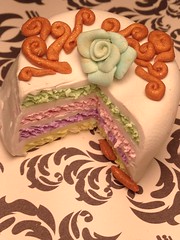
You can make your own miniature layer cake with a spring theme! You will need at least two different colors of polymer clay, but preferably five (one for each cake layer, and a standard color for frosting), a polymer clay razor, and a clay pick or toothpick. Let's get started!

1. I am using spring pastel colors for each cake layer. You can choose to do the same, or find different colors. If you are making a spring pastel cake, start by blending green clay with a sizable clump of white clay:
                                           
Blend it by pinching it with your fingers and rolling it in your palm.

2. Once you have light green, roll it out until it is about half a centimeter thick. Cut out a small circle from cardstock paper or cardboard. This will be your mold for each layer.
                                               
3. Lay the circle on the clay and cut it out with a clay pick or toothpick.
4. Repeat for the colors you want. I used light green, yellow, light pink, and lavender clay.
5. Roll a sheet of white clay about twice as thin as the cake layers. This will be your frosting. Cut out one less circle than the number of cake layers you have. For example, if you have four cake colors, cut out three frosting circles.
                                                 
6. Stack your layers, alternating between cake and frosting. Make sure to place a cake layer on the bottom and on the top!
                                      
7. You might notice that your cake is a bit lopsided. Roll it on its side to even it out. You can also smooth it with your nail.

8. Roll a large sheet of thin white clay. Cover the cake with it as shown:


                                              Bottom view
                                        
                                       Cut the excess with scissors
                                        
9. Mark the cake where you are going to cut it. This will help prevent unevenness in the slicing.
10. Slice it! Use a polymer clay razor or X-acto knife. Kitchen knives (except extremely sharp ones) or scissors will not work! They will smudge your layers!
                                       
11. Texture it by lightly poking a clay pick or toothpick into each cake layer multiple times:
                
12. Finish it!
               
13. Now it's time to decorate! You can improvise your own decoration, or follow my tutorial:
14. Roll out a long, thin log of clay.
                          
15. Cut a small section of it and roll it into a spiral.
                 
16. Repeat this process to cover the cake, leaving a hole in the center.
           

17. Make a rose!


                           Roll it up!
          
                           Add a sheet of clay for a petal.
          
          
\         
                 Your rose is done!
18. Place it on the cake!
              
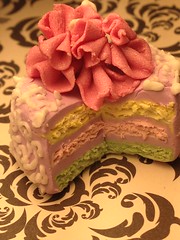
You have now made a spring layer cake!

Miniature Sweet Shops!


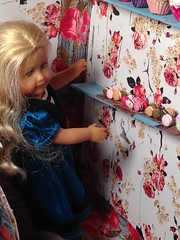
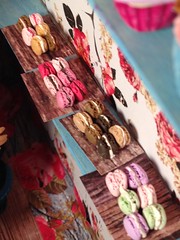
With the miniature pastries I've been making, I decided to make a miniature sweet shop to store them in! The design of my sweet shops are based on miniature maker MyFroggyStuff's Youtube videos:
1. https://www.youtube.com/watch?v=EzPOkYD1-lk
2. https://www.youtube.com/watch?v=UuV4toz39nM

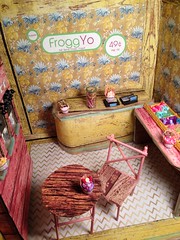
Here are my creations:

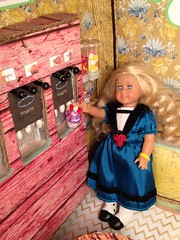
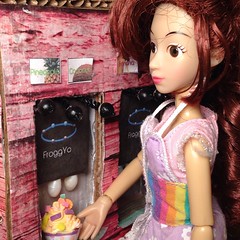
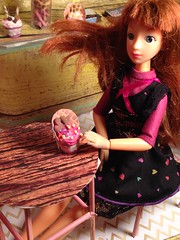
 I made the rooms themselves out of cardboard boxes covered with scrapbook paper, and made other furniture with cardboard, wide popsicle sticks, hot glue, shish-kebab skewers, beads, and nail art jars.


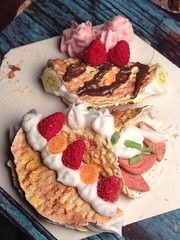
I made the sweet shop into a creperie!


Sunday, March 27, 2016

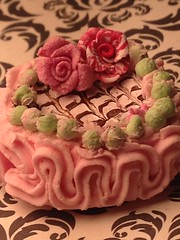
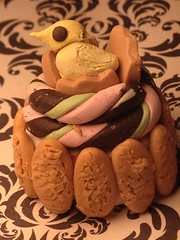
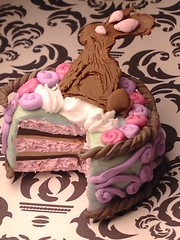
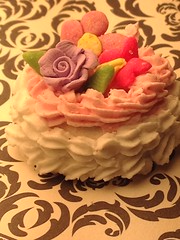
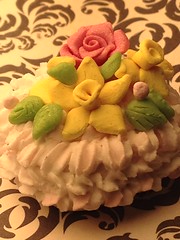
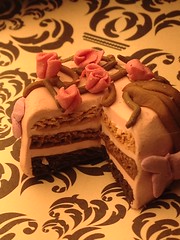
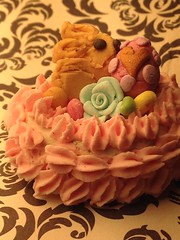
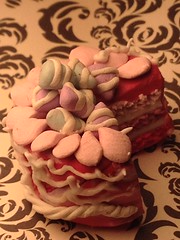
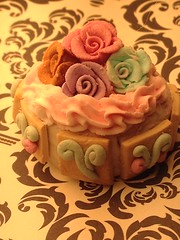
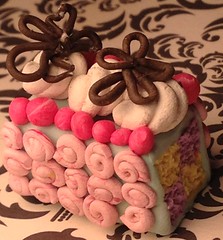
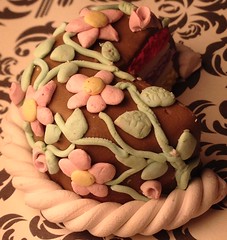
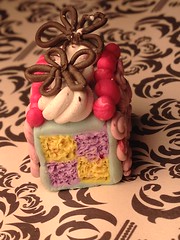
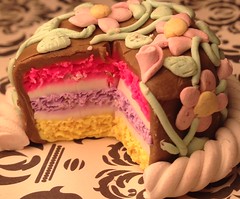
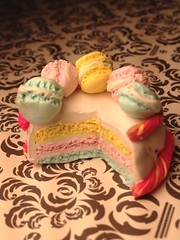
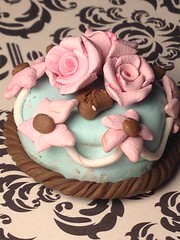
Photo Gallery: Miniature Spring Pastries


 Happy Easter! I hope you enjoy this collection of spring-themed miniatures! If you would like me to do a tutorial of a specific miniature, please feel free to comment!


American Coots


              These small aquatic birds might seem like a variety of duck, but they are actually American coots. Unlike ducks, coots lack webbed feet and instead have scaly legs and toes so they can walk on land. They are migratory birds that live in the Pacific and southwestern United States year-round and occupy northeastern regions during the summer breeding season. Coots generally travel in large flocks on the water, and dive under the surface for food. They eat mainly fish, aquatic insects, and mollusks, but can also eat algae.

A coot's mating season is typically in May and June. During these months they are found in Canada and the middle of the United States. They migrate to the southern United States for the winter. Coots build their nests in reeds, and will often build several before one is selected. Once a nest is selected, a female will lay one egg a day until the clutch reaches 6 to 9 eggs. However, it is not always the female who built the nest that lays the egg. Other coots without nests lay their eggs in a nest while its owner is out foraging. In a 4-year study, researchers found that  13% of all eggs were laid by females in nests that were not their own.
However, very few 'impostor' chicks survive. This is so because the female, with an instinctive impulse to spread her genetic material, rejects the chicks that are not hers. How does she know which chick is which?
She uses the first chick to hatch as a reference, since any eggs laid by a different female will have been laid later and hatch later. Although it is not fully known how they detect which chick is which, some scientists believe they compare other chicks' size with the size of the first chick. Any chicks disproportionately large or small will be abandoned, since size is genetically inherited.
Coots are one of the only known birds to recognize brood parasitism in their chicks. Cuckoos dwell on the fact that other birds will not recognize them in their broods. However, coots are able to distinguish which chick is theirs and ensure that the only chicks they raise contain the parent's genes.


Butterfly Behavior: Mud Puddling


      When most people picture a butterfly, they often envision a vividly colored insect flitting between flowers. However, nectar is not a butterfly's only source of food. These delicate and exquisite creatures congregate near mud puddles and sip the wet mud with their probosces. What could explain this unusual behavior?
                              
Butterflies seek salts from mud that are not present in nectar. It is mainly male butterflies that engage in this 'puddling' behavior because it aids them in reproduction. The nutrients the male absorbs are transferred to the female through the spermatophore, or a sac of nutrients combined with the sperm, and improves the viability of the female's eggs.  Increased viability of the eggs contributes to the development of the caterpillars, ensuring that the male's genes will be passed on. The female can gauge the health of the male by the spermatophore, and select him based on the nutrients it contains. The male has a natural impulse to spread his genes, so he gains nutrients from mud to guarantee that more females will choose to mate with him.


The most common butterflies that congregate in mud puddles include tiger swallowtails and cabbage whites. If you want to observe this phenomena for yourself, you can create your own butterfly mud puddle in your yard. The ideal mud puddle conditions are at mid-day on a sunny day, where water has evaporated from the mud but the ground is still moist.
 1. First, fill a shallow dish with sand, soil, or gravel. This dish should be disposable.
2. Pour water in the pan.
3. Sprinkle salt on the pan and, if possible, add rotting fruit.

Butterflies clustering around a mud puddle is a rare phenomena, so this setup may not attract whole clusters. However, it will likely attract a butterfly or two. Whenever you walk by a river bank, keep your eye out for a mud puddling cluster, especially if it rained recently!